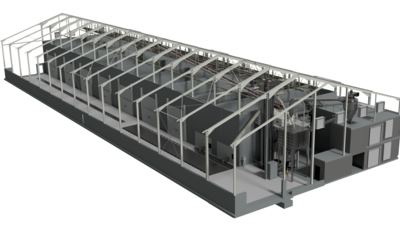
Grain Storage

Grain Storage

High-Capacity Grain Intake, Drying and Processing Plant

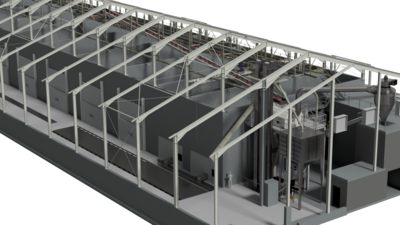
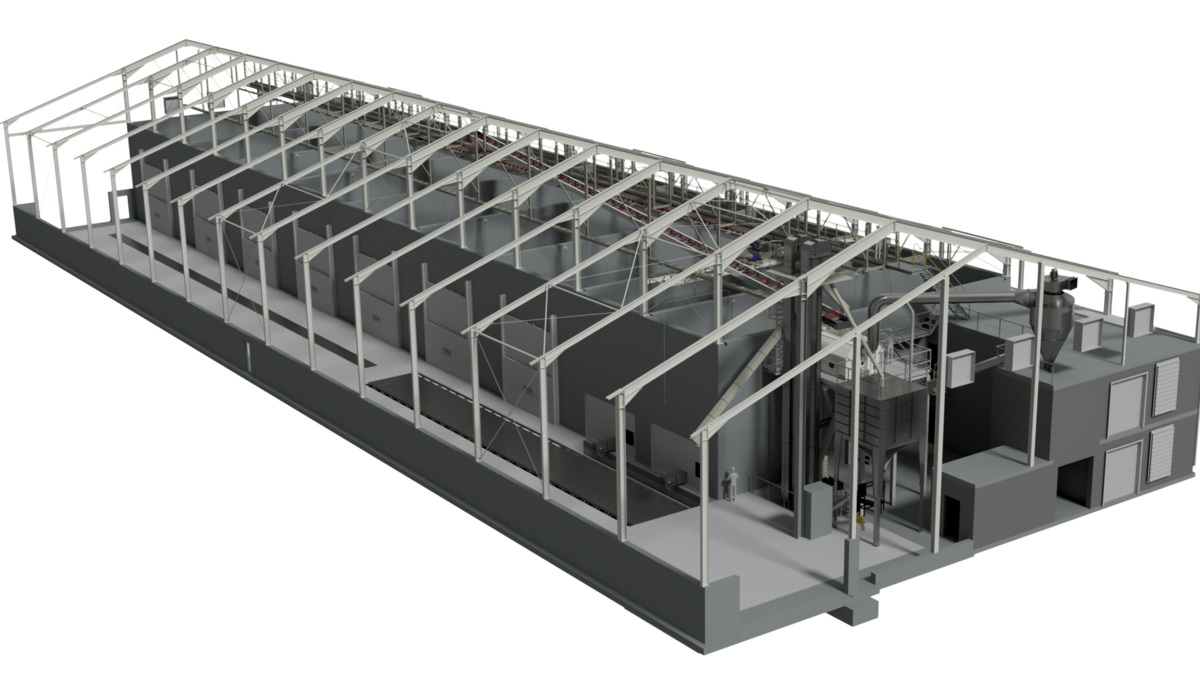
For this project, a modern grain plant was designed to combine high intake capacity, flexible product routes and reliable drying and storage processes. The objective was to create a system capable of receiving, distributing, pre-cleaning, drying, transferring and loading large harvest volumes efficiently.

The focus was on robust conveying technology, high plant performance, wear-resistant execution and a well-coordinated interaction between intake, hall distribution, drying boxes, pre-cleaning, loading and control. An on-farm seed treating station was also integrated into the overall concept.

The project shows how grain processes can be planned not only for capacity, but also for flexibility, automation and modern energy concepts.

Insights

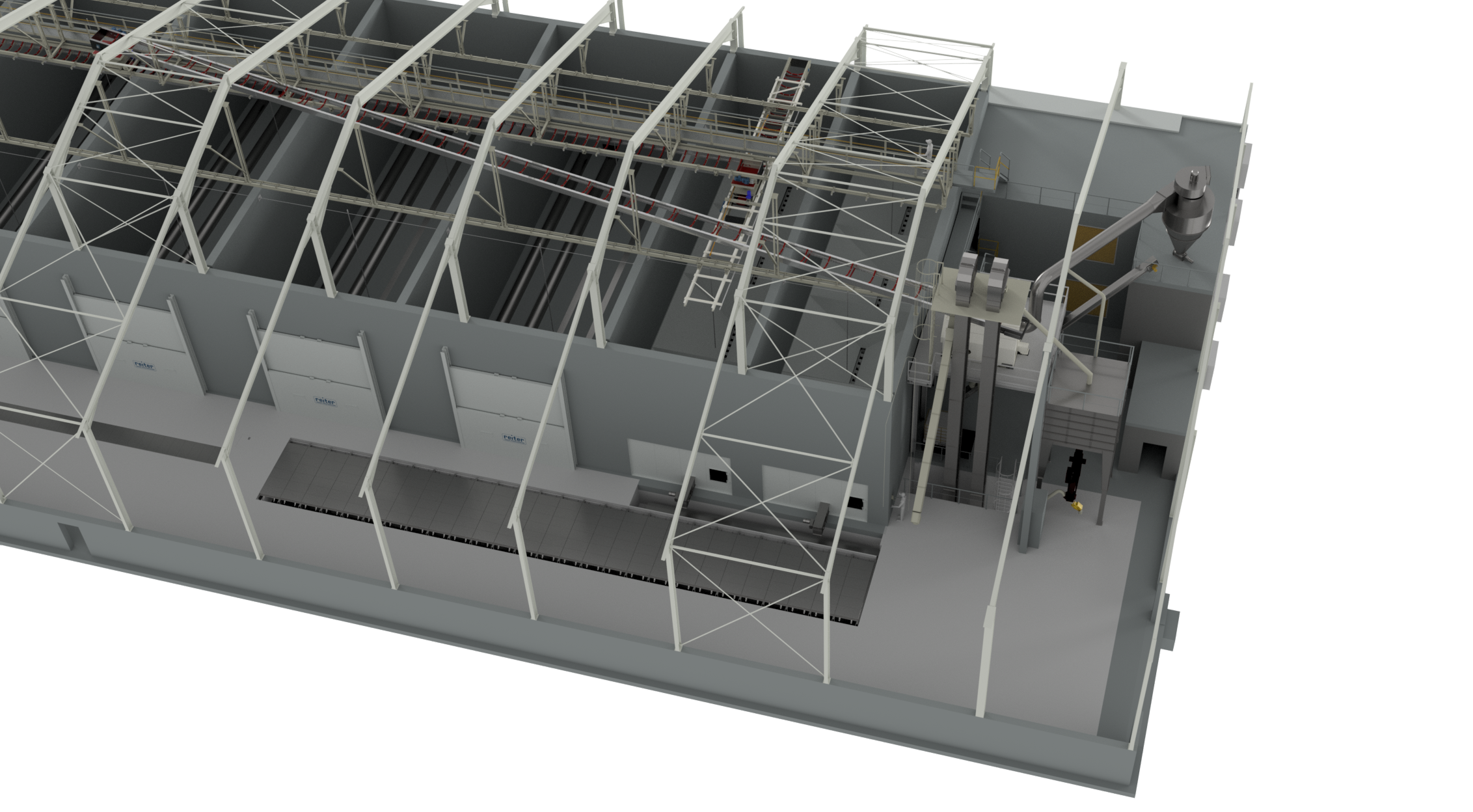
The plant features two intake areas: a truck intake pit and an additional intake section in front of the storage boxes. Both are designed for high throughput and allow flexible feeding of the downstream process areas.

From the intake pits, the product is conveyed further via trough chain conveyors and bucket elevators. The conveying equipment is designed for high capacities and equipped with wear protection at relevant product transfer points to support reliable operation during intensive seasonal use.

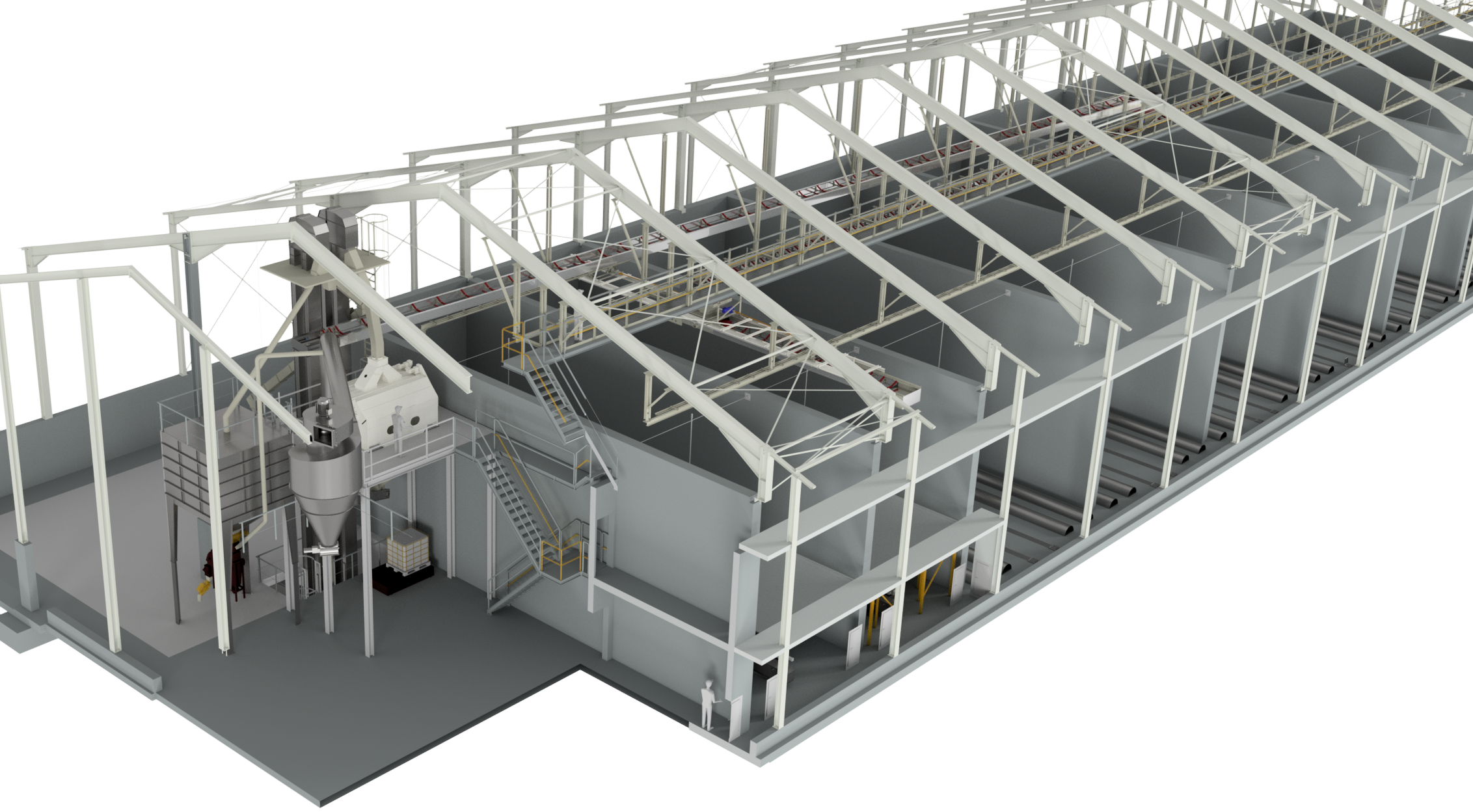
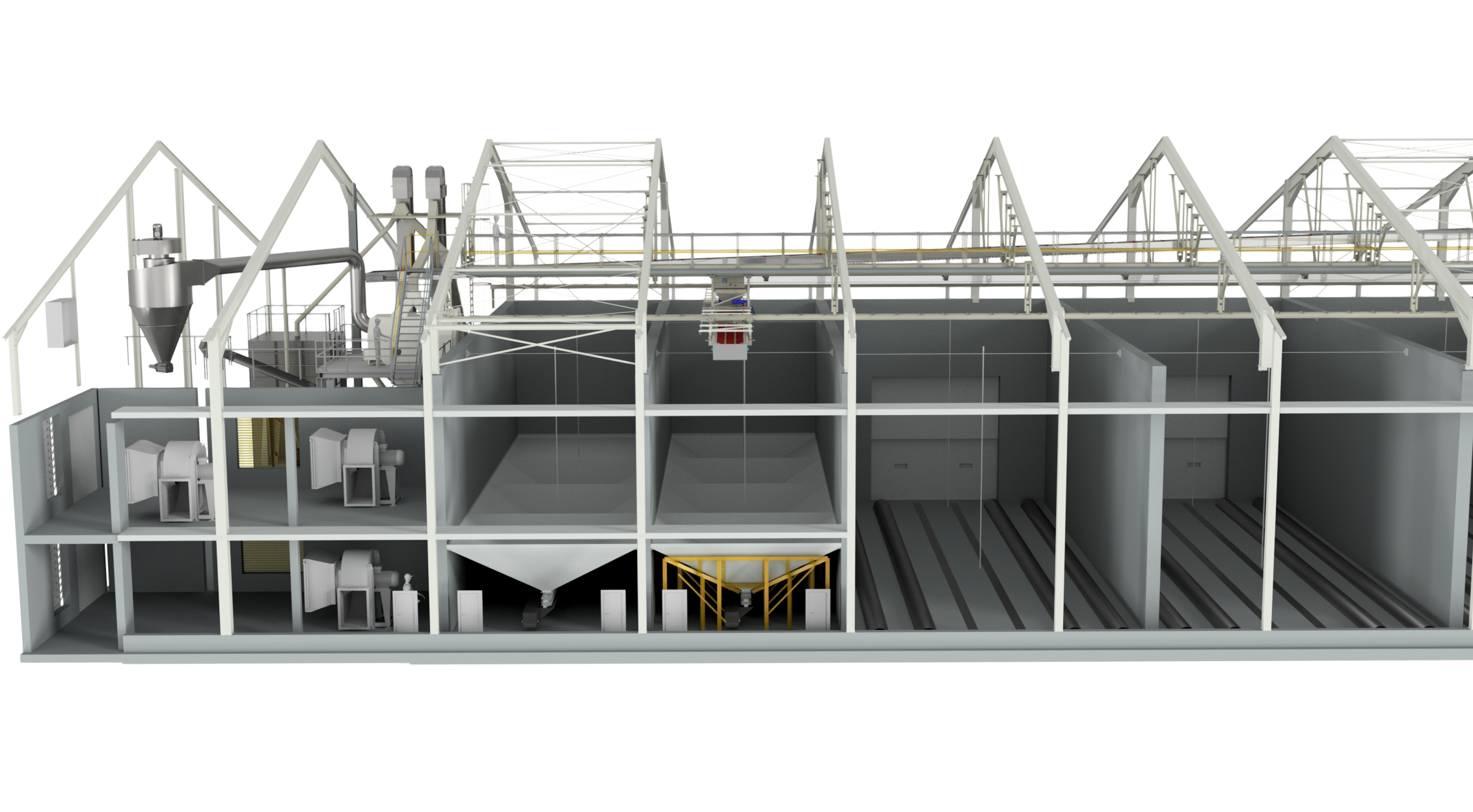
Inside the hall, a coordinated belt conveyor system handles product distribution. Several belt conveyors provide longitudinal and cross distribution, allowing the storage and drying areas to be filled selectively. Movable and reversible belt technology ensures flexible product routing throughout the plant.

Before storage or further processing, the grain can pass through a high-capacity pre-cleaner. Coarse material, dust and light particles are removed, while cyclone dust separation reduces the load on the raw material at an early stage and prepares it for drying, storage or further use.

A central part of the plant is the drying and aeration system. The grain boxes are equipped with self-emptying aeration floors, discharge slides, powerful fans and temperature monitoring. This allows drying and aeration processes to be controlled according to product condition, moisture level and storage target.

Instead of a conventional gas heating system, air heating is provided via hot water heat exchangers. The warm air temperature is regulated by controlling the water flow through each individual heat exchanger. This makes it possible to integrate existing or alternative heat sources and provides greater flexibility in the plant’s energy supply.

For seed treatment, an on-farm seed treating station is integrated into the system. It includes a continuous Niklas W.N. 8 liquid seed treater with a capacity of up to 8 t/h. Cross-flow aspirators before and after treating support the removal of dust and light particles, while an automatic sampler enables representative sampling after treatment.

The plant is operated via a central control system with process visualization, ensuring clear, safe and efficient operation.

Highlights

A particular challenge of this project was the combination of high capacity and flexible hall logistics. Intake, storage, transfer, drying and loading must work reliably together within short harvest windows. For this reason, the product routes were planned to support different operating modes and changing requirements.

The mobile belt conveyor distribution system is a key element of the plant concept. It allows flexible filling of the boxes and combines high throughput with variable product routing. At the same time, bucket elevators, trough chain conveyors and product pipework provide a clear structure for material flow.

Another important aspect is the wear-resistant design. Product pipework as well as inlets and outlets of relevant conveying equipment and machines are lined with wear protection in highly stressed areas. This increases service life and reduces maintenance requirements during intensive operation.

The drying and aeration technology was designed for controlled box operation. Temperature monitoring, air routing, fan capacity and self-emptying floors allow targeted treatment of the stored product, helping to secure product quality, storage stability and process reliability.

A special feature is the change from conventional warm air generation to hot water heat exchangers. This allows the plant to be connected to existing heating systems or alternative energy sources instead of relying solely on a classic gas solution. For modern grain plants, this flexibility is an important factor when considering operating costs, energy availability and sustainability.

The integrated on-farm seed treating station also underlines the holistic approach of the project. The grain plant does not stop at intake, cleaning and storage, but also includes seed treatment as an additional process step.

The result is a high-capacity grain plant with powerful intake and distribution, robust conveying technology, controlled drying and aeration, integrated pre-cleaning, flexible energy supply, modern control technology and an integrated seed treating station.
Custom Solutions – end to end

  • Concept development and process design
  • Project planning and layout design
  • Mechanical and plant engineering
  • Delivery of machinery and plant components
  • Assembly and installation
  • Commissioning
  • Operator training
  • Service and support