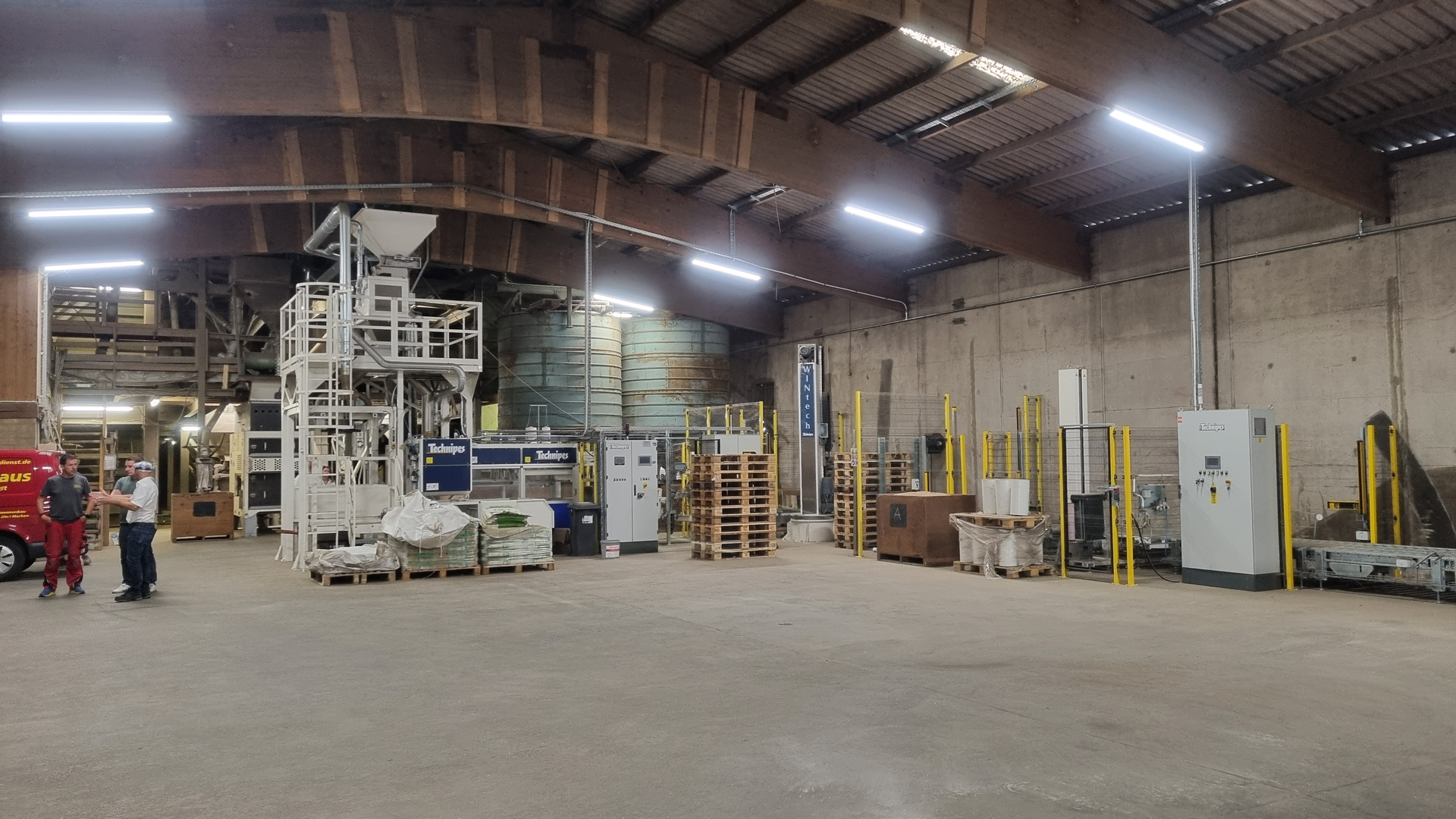
Custom-designed for products, bags and capacity
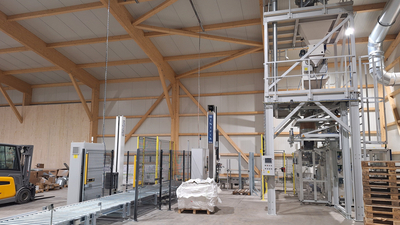
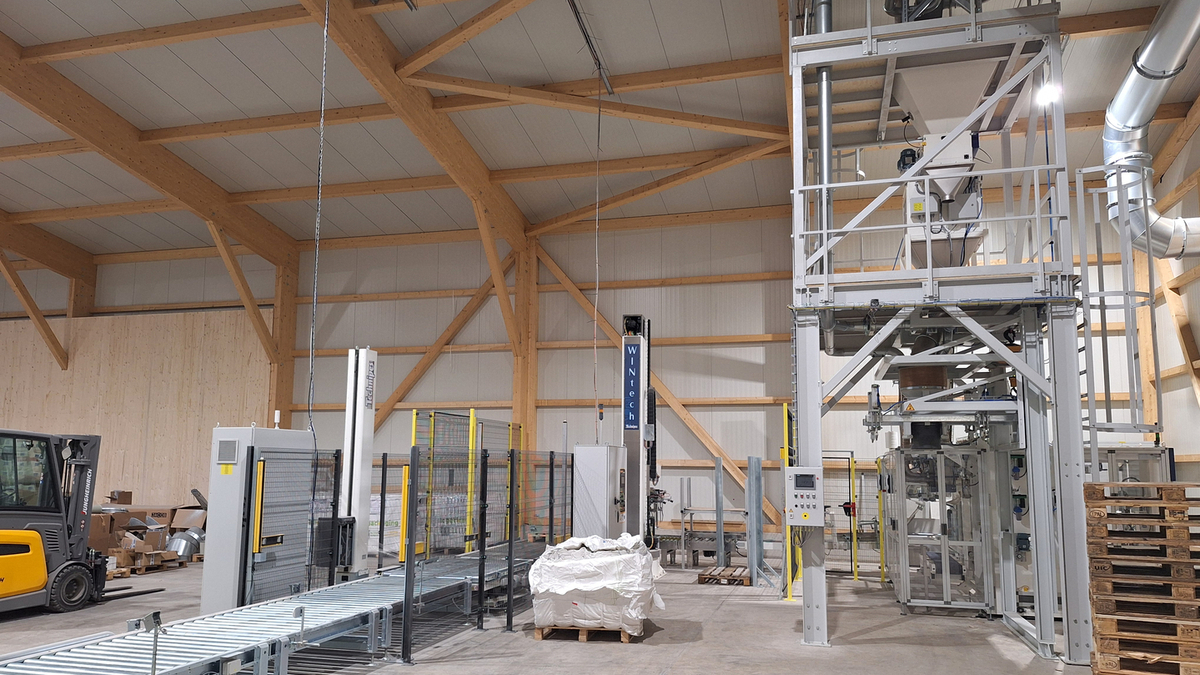
Each bagging line is tailored to the specific application. Key factors include product characteristics, target weight, bag size, desired throughput, operating concept, and downstream automation.
- automatic empty bag magazine
- automatic bag placing
- net weigher
- filling spout with bag clamp
- bag bottom forming and bag positioning
- sewing line
- conveyors
- check weighing
- labeling
- metal detection
- transfer to robot or portal palletizing
Capacity ranges
We integrate everything from semi-automatic bagging systems for low hourly output to high-capacity systems capable of producing up to approximately 1,200 bags per hour.
Flexible lines for small and medium capacities
For small to medium capacities, semi-automatic and compact automatic solutions are available. These are particularly suitable for seed companies, blending plants or facilities with frequent product changes.
- 20 to 50 kg bags
- flexible product changes
- manual or semi-automatic bag placing
- sewing or sealing
- integration of labeling and inspection systems
Automatic lines up to approx. 600 bags/h
For medium to higher capacities, we integrate automatic bagging systems and robot palletizing. These lines are suitable for many standard seed, grain and agricultural products.
- automatic bag placing
- precise weighing
- high operational reliability
- flexible sack formats
- automatic closing technology
- robot palletizing
- integration into complete packaging lines
High-capacity lines up to approx. 1,200 bags/h
For very high capacities, we integrate high-performance bagging systems and suitable portal palletizing systems. These solutions are designed for large production lines where throughput, availability and automation are key.
- high bagging capacity
- automatic bag feeding
- robust high-capacity weighing
- continuous bag transport
- automatic closing technology
- high-performance palletizing
- pallet conveying technology and wrapping
- central control and line integration
Sewing
After filling, bags are closed depending on bag material and customer requirements.
- handheld sewing machine
- semi-automatic sewing line
- automatic sewing system
- combination of sewing and labeling
Labeling and marking
Many packaging lines are equipped with labeling or marking systems. Labeling is often carried out after sewing or closing.
- labeling after sewing
- barcode or QR code marking
- printing and labeling systems
- scanners and inspection systems
- connection to control system, ERP or customer systems
- individual label positioning
This allows traceability, product information and customer-specific marking to be integrated directly into the packaging line.
Twin lines for separated product streams
For applications with different product qualities or treatment types, bagging lines can be designed as double lines. This allows, for example, treated and organic seed or different product qualities to be filled with hermetic separation.
Combined lines for bags and big bags
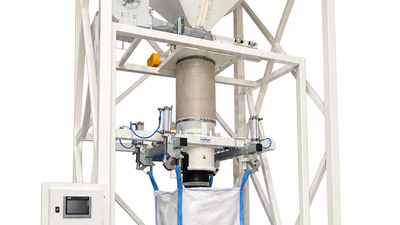
For plants with changing packaging requirements, bagging lines can be combined with big bag filling systems. Below a net scale the product is directed either to the bagging line or to the big bag filling station.
- shared buffer hopper
- net bulk scale
- bagging spout
- bag conveyor
- sewing position or sewing line
- big bag filling spout
- big bag suspension
- aspiration connections
- shared control system
These solutions are particularly economical when bags and jumbo bags need to be processed in one compact line and with small to medium capacities.
Low-dust operation and aspiration
Depending on the product, dust, displaced air or product abrasion can occur during bagging. Bagging lines are therefore equipped with aspiration connections and, if required, dedicated dedusting systems. A well-designed aspiration system improves working conditions, reduces contamination and supports clean plant operation.
Ergonomics and operator relief
Automation in bagging reduces physically demanding manual work. Depending on plant concept, bag handling and transport, palletizing and wrapping can be automated or ergonomically supported.
- height-optimized operating positions
- bag conveyors
- vacuum tube lifters
- automatic bag placing
- automatic palletizing
- clear operator interfaces
- safe access and maintenance areas
Especially where personnel availability is limited or occupational safety requirements are increasing, ergonomic design is an important decision factor.
Inspection systems and quality assurance
For process-safe packaging lines, various inspection systems can be integrated. This makes the packaging line not only efficient, but also controllable and documentable.
- check weigher
- metal detector
- bag and label inspection
- scanners
- rejection of faulty bags
- batch documentation
- data exchange with higher-level systems
Integration into complete packaging lines
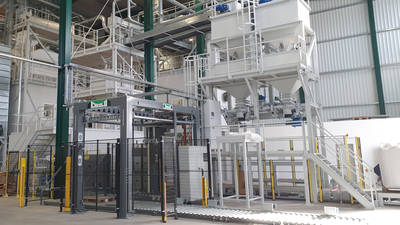
Bagging lines can be supplied as standalone machines or as part of a complete packaging and palletizing line. We integrate product feeding, weighing, bagging, closing, marking, transport, palletizing, wrapping, control technology and safety systems into one coordinated complete system.
Data Sheets
- Electronic gross bagging scale type 52R (EN)
- Absackwaage Typ 52 Universalmaßblatt
- Rundsackstutzen DN80 - DN250 Maßblatt
- Rundsackstutzen DN300 Maßblatt
- Banddosierwaage BDW 9 Maßblatt
- Electronic Net Scale (EN)
- Absack-/ Durchlaufwaage Typ 50kg Maßblatt
- Durchlaufwaage Typ 30t Maßblatt
- Durchlaufwaage Typ 60t Maßblatt
- Durchlaufwaage Typ 100t Maßblatt